






Introduction — Lighting the Big Stages of 2026
From open-air music festivals to large-scale city celebrations, outdoor stage lighting is becoming more ambitious, more technical, and more essential than ever.
As global audiences return to live events, organizers and lighting professionals face growing pressure to deliver spectacular visual experiences—while also meeting rising expectations for efficiency, safety, and sustainability.
The year 2026 marks a turning point.
Outdoor lighting is no longer just about brightness or color; it’s about adaptability, reliability, and performance under any condition.
From modular setups that cut installation time in half to energy-efficient LEDs that lower operational costs, innovation is reshaping how B2B project teams plan, install, and manage stage environments.
These changes are setting new standards for the industry—and opening opportunities for manufacturers, rental companies, and production teams ready to embrace the next evolution of lighting design.
Market Forces Reshaping Outdoor Stage Projects
The outdoor stage lighting sector is being reshaped by powerful market and environmental forces.
Growing demand for large-scale open-air events, tighter project timelines, and rising energy costs are driving professionals to seek smarter and more adaptable solutions.
For rental companies and system integrators, the pressure to deliver faster setups and reliable results is higher than ever. Equipment must perform under unpredictable weather, meet sustainability targets, and remain easy to transport between venues.
Manufacturers are responding with designs that are lighter, modular, and energy-optimized—helping B2B clients handle complex projects with fewer resources and greater consistency.
These combined factors have set the stage for the biggest outdoor lighting transformation in years, leading directly into the trends defining 2026.
Trend 1 — Modular Lighting Systems for Flexible Stage Design
As outdoor events become larger and more dynamic, modular stage lighting systems are redefining how professionals build and manage lighting setups.
Instead of relying on fixed truss installations and heavy single-unit fixtures, project planners now turn to interlocking and scalable lighting modules that can be configured, transported, and maintained with far greater efficiency.
These modular systems are not just convenient—they’re transforming how rental companies and event technicians work across multiple venues.
Faster Setup, Fewer Resources

Speed and flexibility are the new benchmarks for professional outdoor stage lighting setups.
With modular units, technicians can assemble entire lighting arrays in half the time compared to traditional rigs.
Many quick installation stage lights now use magnetic or click-lock connectors, enabling rapid deployment even in tight production schedules.
This innovation cuts labor costs, reduces downtime between shows, and ensures consistent positioning and alignment across different stage formats.
For large festivals or touring events, the ability to deploy and dismantle lighting quickly is not just a convenience—it’s a competitive advantage.
Customizable Designs for Every Event

Modular lighting fixtures also allow for creative flexibility.
Each modular LED lighting bar or linkable wash panel can be connected in multiple orientations, forming geometric grids, curves, or light tunnels tailored to specific performances.
Designers can easily scale up for main stages or downsize for smaller corporate events without changing fixture models.
This adaptability helps rental companies maintain a streamlined inventory while still meeting a wide range of client needs.
By using outdoor event lighting fixtures that support modular mounting systems, teams can deliver both visual impact and structural efficiency—without additional rigging complexity.
Ease of Transport and Maintenance

The 2026 modular lighting trend also addresses logistics.
Compact designs and lightweight materials make portable stage lighting systems easier to move between venues.
Each fixture or module can be serviced individually—technicians simply replace the faulty unit instead of disassembling the entire array.
This approach reduces maintenance time, prevents equipment waste, and extends product lifespan—key priorities for B2B buyers managing large inventories.
For global event circuits or touring productions, these improvements translate into fewer trucks, faster load-ins, and lower operational costs.
Trend 2 — Durability Under All Conditions
While creativity defines the stage, durability defines success in outdoor lighting projects.
In 2026, lighting designers and rental companies face tougher weather conditions, longer event schedules, and higher performance expectations.
That’s why IP65 outdoor stage lights and weatherproof LED fixtures have become indispensable for professionals who demand reliability in every environment—from tropical humidity to desert dust.
Built to Withstand the Elements

Outdoor stages operate in unpredictable environments.
High winds, rain, and temperature fluctuations can easily compromise poorly designed equipment.
Modern weatherproof LED stage lights are engineered with sealed optical housings, waterproof connectors, and advanced heat dissipation systems that maintain brightness and stability under stress.
Die-cast aluminum bodies and anti-corrosion coatings protect against long-term damage, ensuring consistent color accuracy and output even after hundreds of shows.
For touring production teams, these heavy-duty outdoor lighting fixtures mean fewer failures, less downtime, and lower replacement costs.
IP65 Protection as the New Industry Standard

By 2026, IP65-rated festival lighting fixtures have become the baseline specification for outdoor projects.
The IP65 rating ensures complete protection against dust ingress and water jets—critical for stages exposed to rain or fog effects.
Manufacturers are now going beyond compliance, offering IP66 or IP67 waterproof stage lights for extreme conditions such as coastal or desert environments.
This reliability gives integrators and event managers the confidence to deliver shows regardless of the weather forecast.
Clients and city authorities are also including IP certifications as part of tender requirements, making durability not just a design choice but a business necessity.
Thermal Control and Longevity

Durability also means maintaining optimal performance over time.
Next-generation fixtures use intelligent thermal regulation systems that automatically adjust fan speeds or switch to passive cooling when needed.
This prevents overheating, extends LED lifespan, and maintains consistent color temperature.
For rental companies managing large inventories, it reduces maintenance frequency and ensures each outdoor stage light performs at peak efficiency show after show.
By investing in long-life, weatherproof lighting systems, B2B clients save money and reinforce their reputation for reliability—two key advantages in an increasingly competitive event industry.
Trend 3 — Power Efficiency Meets Performance
Energy efficiency has become one of the most critical performance metrics for outdoor and festival lighting projects.
In 2026, event organizers and lighting engineers are under increasing pressure to minimize power consumption while maintaining visual impact.
The new generation of energy-efficient LED stage lights is rising to that challenge—delivering powerful output with reduced energy draw and smarter power management.
Maximizing Brightness with Lower Power Draw

Advances in LED chip architecture have transformed what’s possible on outdoor stages.
Modern low power outdoor lighting fixtures now deliver up to 150 lm/W, providing high luminous output with minimal energy usage.
Improved optical lenses and beam control reduce wasted light, ensuring every watt contributes directly to visual performance.
For touring events and remote festivals relying on generators, these innovations translate into less fuel consumption, reduced heat, and quieter operation—all while maintaining stage brilliance.
Smart Power Management and Energy Control

Efficiency today extends far beyond LED hardware—it’s about intelligent system design.
New eco-friendly festival lighting systems integrate smart drivers that automatically adjust brightness levels based on scene requirements or ambient light.
Some models feature programmable dimming curves, allowing technicians to balance artistic needs with energy savings.
Paired with wireless DMX control, these systems let operators manage hundreds of fixtures remotely, reducing idle consumption during rehearsals or downtime.
By aligning technology and control, B2B clients can significantly reduce operational costs without compromising creativity.
Sustainability as a Business Advantage

For professional suppliers and event planners, energy efficiency is not just a technical choice—it’s a competitive edge.
Government regulations and corporate sustainability goals are reshaping procurement standards across Europe, North America, and Latin America.
Projects that use green-certified, low-energy LED stage lighting are more likely to win public tenders and gain approval for environmentally sensitive venues.
By adopting power-efficient outdoor lighting solutions, rental companies and system integrators position themselves as forward-thinking, responsible partners in the global entertainment industry.
Lighting Applications by Event Type
As outdoor and festival lighting becomes more specialized, different event formats now demand different lighting strategies.
From high-energy music festivals to polished corporate presentations, every environment requires a distinct balance between brightness, control, and durability.
Here’s how lighting professionals and B2B buyers can adapt modular and power-efficient technologies across the most common outdoor event types.
Music Festivals — Power, Dynamics, and Reach

Outdoor music festivals are built around energy and emotion.
Lighting must deliver long-throw beams, vivid colors, and synchronized motion that enhance both live and broadcast visuals.
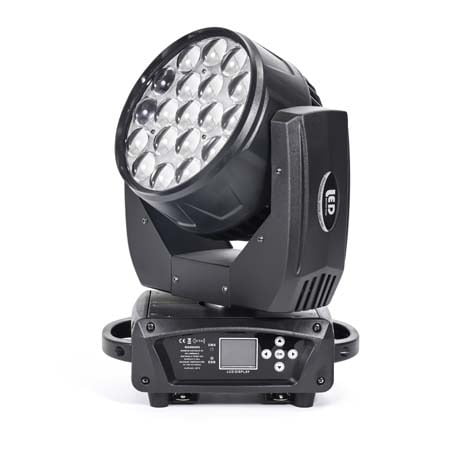
In 2026, beam and wash hybrid lights are the go-to choice for festival stages—combining strong output with flexible zoom functions.
Many teams are now switching to wireless DMX-controlled outdoor fixtures, which reduce setup time and improve synchronization across main and side stages.
For B2B clients, this means faster deployment, stronger effects, and lower technical risk under pressure.
Corporate & Brand Events — Precision and Aesthetic Consistency

Corporate showcases and brand activations prioritize visual harmony over intensity.
Lighting designers focus on smooth color transitions, uniform brightness, and reliability for long runtime events.
Modern outdoor LED wash lights for events use tunable white and RGBAL color engines to achieve exact tone control for logos and stage décor.
These fixtures are often chosen for their energy-efficient profiles and silent fanless cooling, making them ideal for product launches, exhibitions, and VIP shows.
Sports & City Celebrations — Reliability Above All

From marathons to national celebrations, stadium and city-scale lighting demands maximum durability.
Fixtures must withstand rain, wind, dust, and long hours of continuous operation without failure.
That’s why IP65/IP66-rated flood and spot fixtures have become the industry standard.
Their reinforced housings, intelligent thermal management, and anti-corrosion finishes guarantee safety and performance even under extreme outdoor conditions.
For municipal projects or televised sports events, reliability is not negotiable—it’s essential.
Procurement & Design Guidelines for B2B Buyers
With the rapid evolution of outdoor stage lighting technology, choosing the right fixtures has become as critical as the creative design itself.
For rental companies, system integrators, and event organizers, understanding what to evaluate before purchasing ensures long-term efficiency, safety, and return on investment.
The following guidelines highlight the key factors every B2B buyer should consider in 2026 and beyond.
Evaluate IP Rating and Material Quality

Outdoor projects demand fixtures that can survive the elements.
Always check for IP65 or higher-rated LED stage lights—these are essential for resisting rain, dust, and humidity.
Look for housings made from die-cast aluminum or reinforced composite materials, as they provide better heat management and corrosion resistance.
Durable materials mean fewer replacements, lower maintenance costs, and consistent performance across multiple venues.
Check Power Efficiency and Heat Management

Modern lighting design isn’t just about power—it’s about efficiency.
Choose power-efficient stage lighting fixtures that balance high output with low consumption, ideally achieving over 130 lm/W.
Advanced intelligent thermal control systems automatically regulate temperature and reduce stress on internal components.
This combination ensures both environmental sustainability and long-term reliability, reducing downtime during critical shows.
Consider Modularity and Maintenance Access

In 2026, modularity is a decisive factor in equipment selection.
Opt for modular outdoor lighting systems that allow quick part replacement or configuration changes.
Technicians can now service fixtures on-site—swapping LED engines, drivers, or lenses in minutes.
This design flexibility improves inventory utilization and lowers total ownership costs for rental and production companies managing frequent events.
Partner with OEM Manufacturers for Customization

As the market becomes more specialized, customization is key to differentiation.
Collaborating with OEM stage lighting manufacturers gives buyers access to tailored optics, firmware, or branding solutions that match their project requirements.
OEM partnerships also ensure consistent quality control, faster lead times, and access to updated designs.
Working directly with the factory allows B2B clients to scale smarter, reduce dependency on intermediaries, and secure competitive pricing.
Technology Spotlight — 2026 Outdoor Lighting Innovations
Innovation is driving a new generation of outdoor stage lighting solutions that combine performance, reliability, and sustainability.
In 2026, the industry is seeing major leaps in control systems, power management, and fixture engineering—technologies designed to make outdoor setups faster, safer, and more efficient for B2B clients worldwide.
Here are the standout innovations shaping how professionals plan and execute large-scale events.
Wireless DMX Control
Eliminates complex cabling and enables seamless synchronization across wide outdoor stages. Ideal for festivals and touring setups that require quick installation and reliable real-time response.Battery-Powered LED Fixtures
Provide energy independence for remote or temporary venues. With extended runtimes and smart charging systems, these fixtures minimize generator use and simplify logistics.Smart Cooling Systems
Advanced thermal sensors automatically adjust fan speeds or activate passive cooling modes, extending component lifespan and ensuring consistent brightness even under extreme heat.Quick-Swap Modular Design
Magnetic and modular fixture structures allow technicians to replace LED engines, lenses, or drivers within minutes—reducing downtime and maintenance costs during live productions.Eco-Friendly Materials and Manufacturing
Manufacturers are adopting recyclable aluminum housings, low-VOC coatings, and energy-efficient production lines to reduce overall carbon footprint. Sustainable packaging and logistics complete the cycle.Cloud-Based Monitoring and Diagnostics
Integrated network dashboards let teams track fixture temperature, runtime, and signal integrity in real time—empowering predictive maintenance and multi-venue management.
Together, these technologies represent the foundation of a smarter, greener, and more adaptable outdoor lighting ecosystem—one built to meet the demands of 2026 and beyond.
Market Shift for B2B Clients
The outdoor and festival lighting market in 2026 is being reshaped by global sustainability goals, smarter supply chains, and the growing influence of design-driven purchasing decisions.
For B2B buyers, distributors, and rental companies, these shifts are creating both challenges and new growth opportunities.
Understanding these trends helps suppliers and manufacturers stay aligned with market demand and stay competitive in a rapidly evolving landscape.
| Market Shift | Description & Impact | Response Strategy for B2B Buyers / Suppliers |
|---|---|---|
| 1. Green Compliance Becomes Mandatory | Governments and event organizers now prioritize energy-efficient lighting solutions with documented sustainability credentials. | Invest in eco-certified LED fixtures and partner with manufacturers who comply with ISO and RoHS standards. |
| 2. Local Supply Chain Preference | Shipping delays and cost fluctuations are driving clients to seek regional OEM lighting suppliers for faster lead times and after-sales service. | Establish partnerships with local warehouses and OEM factories to ensure quick delivery and competitive pricing. |
| 3. Demand for Customizable Fixtures | Brands and rental companies want custom housing, optics, or firmware to match specific event themes or technical setups. | Collaborate directly with OEM manufacturers offering flexible design customization. |
| 4. Rental Market Growth | Rising event frequency and shorter project timelines are pushing more companies toward rental-based lighting solutions instead of permanent installations. | Build hybrid business models that support both sales and long-term rental services with modular product lines. |
| 5. Integration with Smart Systems | Event venues increasingly use DMX-over-IP and smart monitoring systems for large-scale coordination. | Choose network-compatible lighting systems with Artnet, RDM, and wireless DMX control compatibility. |
| 6. Price Sensitivity with Quality Expectations | Buyers demand premium performance at optimized cost, emphasizing total value over initial price. | Focus on cost-performance balance, highlighting durability, lifespan, and OEM reliability as key differentiators. |
FAQ — Outdoor & Festival Lighting 2026
Q1: What are the key outdoor stage lighting trends for 2026?
A: The main trends include modular lighting systems, durable IP65-rated fixtures, and energy-efficient LED technology. Together, they enable faster setups, lower maintenance, and sustainable performance for outdoor events and festivals.
Q2: Why is modular design important for outdoor lighting projects?
A: Modular lighting allows quick installation, easy maintenance, and flexible configuration across different stage sizes. For rental companies and event planners, it reduces labor time and increases long-term equipment value.
Q3: How does IP65 protection improve outdoor stage lighting reliability?
A: IP65 LED fixtures resist rain, dust, and humidity, making them ideal for unpredictable weather conditions. This protection ensures consistent output and safety for large-scale events and touring productions.
Q4: What makes energy-efficient LED lights essential for festivals?
A: Modern energy-efficient stage lights use less power while delivering brighter output. They help event organizers reduce generator load, lower costs, and align with sustainability goals without sacrificing visual quality.
Q5: How can OEM partnerships benefit lighting suppliers or event companies?
A: Partnering with OEM lighting manufacturers enables custom fixture design, brand labeling, and optimized pricing. It also ensures technical support and quality control tailored to each project’s unique requirements.
Conclusion: Building Brighter, Smarter Stages for 2026
The outdoor and festival lighting industry is entering a new era—defined by modularity, durability, and energy efficiency.
From modular beam systems that reduce setup time, to IP65 weatherproof fixtures that thrive under any condition, and power-efficient LEDs that support sustainability goals, every innovation is reshaping how large-scale events come to life.
For B2B clients, rental companies, and lighting designers, success in 2026 depends on combining technical reliability with creative flexibility.
Those who embrace modular designs, smart control systems, and OEM-level partnerships will not only deliver stunning visual experiences but also build a future-proof foundation for business growth.
At Vorlane, we believe the next stage of lighting innovation is about more than technology—it’s about empowering professionals to create, connect, and perform without limits.
The future of outdoor lighting is not just bright—it’s intelligently designed.
Ready to bring the next generation of lighting to your outdoor projects?
Get a Quote or Talk to Our Team to discover modular, power-efficient solutions built for 2026 and beyond.



 EN
EN  ES
ES  PT
PT  DE
DE  FR
FR  KO
KO  JA
JA  RU
RU  AR
AR  IT
IT  TR
TR  MS
MS  ID
ID  VI
VI  TH
TH  HI
HI  BN
BN  ZH
ZH