





1. Introduction: Why Are So Many Users Torn Between DMX192 and DMX512?
Choosing the right lighting controller is one of the first big decisions beginners face—and it’s also one of the most confusing. Most small stages, DJs, churches, schools, and event planners start with LED PAR lights or simple moving heads. Then the same question appears every time:
Should I buy a DMX192 controller or upgrade directly to a DMX512 console?
Both options look similar on the surface, both promise compatibility with “DMX lights,” and both are widely recommended online. But in reality, they serve completely different needs. One is built for basic setups with limited channels, while the other is designed for larger fixtures, professional shows, and future expansion.
This article explains why the decision is not as simple as comparing two numbers. By understanding channel capacity, fixture demands, programming flexibility, and real-world usage, you’ll know exactly which controller fits your stage, budget, and long-term plans.
2. What Is a DMX Console?
A DMX console—also called a lighting controller—is the central device that sends digital commands to your stage lights. “DMX” stands for Digital Multiplex, a communication protocol that allows one controller to manage hundreds or even thousands of lighting channels through a single cable line.
In simple terms, a DMX console tells every light what to do:
• how bright it should be
• which color to output
• how fast to strobe
• where a moving head should pan or tilt
• when effects should start or stop
Every fixture on the rig listens to the controller and reacts instantly.
DMX consoles come in different levels:
• Entry-level units (like DMX192) offer basic fader control for small setups.
• Standard DMX512 consoles provide full channel addressing, scene storage, chases, and more flexible programming.
• Advanced consoles (MA, Tiger, Hog, etc.) add touchscreens, multi-universe output, networking, 3D visualization, pixel mapping, and show-time automation.
Whether you’re running a DJ booth, church stage, theatre, or professional touring rig, the DMX console is the “brain” of your entire lighting system—the tool that transforms simple lights into coordinated, expressive visual performances.
3. DMX192 vs DMX512: Core Differences Explained
The two most common console types—DMX192 and DMX512—serve very different needs.
Here’s a clear side-by-side comparison to help you understand their real differences:
DMX192 vs DMX512 Comparison Table
| Feature | DMX192 Console | DMX512 Console |
|---|---|---|
| Total Channels | 192 channels | 512 channels (industry standard) |
| Lighting Capacity | Suitable for small setups with fewer fixtures | Handles medium to large rigs with many fixtures |
| Typical Use Case | Weddings, DJs, small events, KTV, home parties | Concerts, theaters, churches, clubs, professional stages |
| Programming Flexibility | Basic scene storage and chase functions | Advanced programming, effects, cue stacks, multi-scenes |
| Fixture Compatibility | Works well with simple LED PARs and small moving heads | Supports complex moving heads, lasers, strobes, media devices |
| Learning Curve | Beginner-friendly, simple layout | Medium to advanced; allows deeper customization |
| Portability | Lightweight and easy to carry | Larger and heavier depending on model |
| Budget Range | Low cost, ideal for starters | Mid to high cost depending on features |
| Ideal Users | DJs, wedding hosts, small venue owners, beginners | Lighting designers, engineers, rental companies, touring shows |
If your setup is small and budget is limited, DMX192 will deliver exactly what you need.
If you require scalability, professional features, and future expansion, DMX512 is the clear choice.
4. Which One Should You Choose?
Choosing between a DMX192 and a DMX512 console becomes easy once you evaluate the type of events you handle, your fixture count, and how advanced your lighting effects need to be.
Choose a DMX192 Console if you:

-
Have a small setup (a few PAR lights + a few moving heads)
-
Work with a limited budget
-
Are a beginner who only needs essential functions
-
Handle weddings, hotel events, small parties, home gatherings, or lightweight shows
-
Prefer a compact, simple, and portable controller
Choose a DMX512 Console if you:

-
Have many fixtures that require more channels
-
Use moving heads, wash lights, lasers, strobes, or pixel-mapped fixtures
-
Need programming flexibility, music sync, cue stacks, and smooth scene changes
-
Work in concerts, stage productions, bars, clubs, rental companies, or professional environments
-
Want a controller that supports future expansion
One-Sentence Summary:
Small venues go with DMX192.
Large stages and professional shows choose DMX512.
5. Which DMX Console Should You Use for LED PAR Lights?
LED PAR lights typically use 6 to 12 DMX channels per fixture, depending on their color system (RGB, RGBW, RGBWA+UV), strobe functions, macros, or dimming modes. Selecting the correct controller depends on how many PAR lights you use and whether your setup includes other fixture types.
When a DMX192 Console Is Appropriate
A DMX192 controller is suitable if your setup meets the following conditions:
-
You only use a small number of LED PAR lights.
-
The total number of channels remains below 192.
-
You do not use moving heads, lasers, or multi-attribute fixtures.
-
You prefer a simple, portable, and budget-friendly controller.
When a DMX512 Console Is the Better Choice
A DMX512 controller is recommended if:
-
You operate more than 16 LED PAR lights.
-
Your PAR fixtures each use 10–12 channels.
-
Your stage setup includes moving heads, wash lights, lasers, or strobes.
-
You need space for future expansion and more complex programming.
Real Channel Calculation Example
Channel calculation is the most reliable way to choose between DMX192 and DMX512.
Example 1
You use 8 LED PAR lights, each with 8 DMX channels:
8 fixtures × 8 channels = 64 channels total
A DMX192 controller can easily handle this.
Example 2
Your setup increases to 20 LED PAR lights:
20 fixtures × 8 channels = 160 channels
This still fits within 192 channels, but leaves almost no room for additional lighting.
Example 3
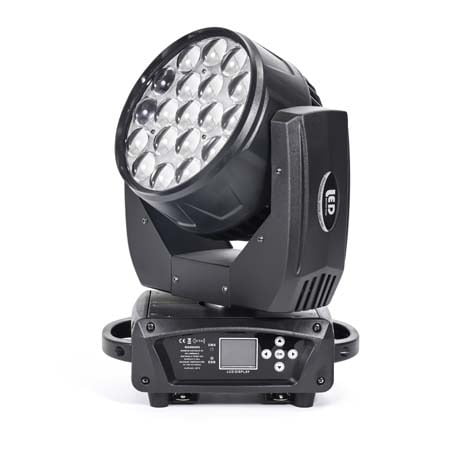
You add 4 moving heads, each requiring 16 channels:
Moving heads: 4 × 16 = 64 channels
PAR lights: 20 × 8 = 160 channels
Total = 224 channels
A DMX192 controller cannot support this.
A DMX512 controller is required.
Summary
-
A few PAR lights: DMX192 is sufficient.
-
More than 16 PAR lights: DMX512 is strongly recommended.
-
Any setup that includes moving heads: DMX512 is essential.
This ensures stable operation, enough channel capacity, and room for future upgrades.
Bonus: The 5 Biggest Mistakes to Avoid When Choosing a DMX Console
Selecting a lighting console can easily lead to poor performance or wasted budget if you overlook key technical details. These common pitfalls often cause compatibility issues, insufficient channel capacity, or unnecessary limitations.
-
Ignoring DMX Channel Requirements
Many users choose a controller before calculating total channels. Always count your PAR lights, moving heads, strobes, and lasers first to avoid running out of channels mid-show. -
Choosing Based on Price Instead of Needs
A cheaper console may look appealing, but low-cost options often lack programming flexibility, stable outputs, or scalability for future upgrades. -
Overlooking Fixture Compatibility
Not all controllers work well with advanced RGBWA+UV, pixel bar, or multi-attribute fixtures. Always confirm fixture profiles and DMX modes are supported. -
Underestimating Future Expansion
Planning only for your current setup often leads to early upgrades. Choose a controller that can handle at least 30–50% more fixtures than you have today. -
Ignoring Workflow and User Experience
A powerful console means nothing if operators can’t use it efficiently. Touchscreen workflow, fader layout, and programming logic matter just as much as specifications.
Optional: Real User Experiences and Practical Recommendations

Real-world feedback often reveals more than specifications on paper. Here are two practical experiences that highlight how different consoles perform in everyday use and why many users eventually choose Vorlane’s controllers for reliability and value.
Experience with a DMX512 Console
One operator shared that their affordable DMX512 console—priced only in the low hundreds—performed far beyond expectations. It offered 512 channels, a responsive touchscreen, and USB backup support, making it ideal for small to mid-sized events. Despite the low cost, the console delivered stable output, smooth programming, and dependable scene transitions. For event planners and stage technicians who require flexibility without investing in high-end systems, a DMX512 model like this proves to be a strong choice.
Experience with a DMX192 Console
Another user who frequently handles weddings noted that a DMX192 console became their go-to tool. Its compact size, simple user interface, and quick response speed made it perfect for mobile setups. They reported that the workflow efficiency improved significantly and setup time was drastically reduced. For small venues or simple PAR light configurations, a 192-channel controller is often more than enough.
Why Many Users Upgrade to Vorlane Controllers
Across multiple user reports, Vorlane’s DMX consoles stand out for combining practicality with modern design. They offer smoother programming, better compatibility with LED PARs and moving heads, and stronger build quality compared to many entry-level alternatives. Whether users start with 192 or 512 channels, Vorlane’s controllers provide scalability, stable output, and an operator-friendly experience that makes them suitable for both beginners and professionals seeking dependable stage control.
FAQ
1. What is the main difference between DMX192 and DMX512 controllers?
DMX192 provides 192 channels and is suitable for small setups like weddings, hotels, and home parties. DMX512 offers 512 channels and handles larger systems with multiple PARs, moving heads, and effects. If you plan to expand your lighting rig, DMX512 is the better long-term option.
2. Can a DMX192 controller run moving head lights?
Yes, but only if the total channel count of all fixtures stays within 192. Since most moving heads use 12–18 channels each, a DMX192 controller becomes limiting quickly. For more than two or three moving heads, DMX512 is strongly recommended.
3. How many LED PAR lights can a DMX512 controller support?
It depends on each PAR’s channel mode. For example, if one LED PAR uses 8 channels, a DMX512 console can run up to 64 of them. However, real setups usually mix PARs, washes, and effect lights, so keep some channel space reserved.
4. Is a touchscreen DMX console better for beginners?
Touchscreen consoles are easier to visualize and program, especially for users who prefer intuitive layouts. However, traditional button-based consoles may be more stable in rough environments. It ultimately depends on operating style and budget.
5. Which controller should I buy if I plan to upgrade my lighting setup later?
Choose a DMX512 controller. It offers higher channel capacity, future-proof compatibility with moving heads and lasers, and more advanced programming features. It is the safer choice for DJs, event companies, rental houses, and growing venues.
Conclusion: Choosing Between DMX192 and DMX512 with Confidence
Selecting the right lighting controller ultimately comes down to understanding your setup size, fixture types, and long-term goals. DMX192 is a practical, budget-friendly choice for small venues, wedding hosts, hobbyists, and users who only need basic control of a few LED PARs. In contrast, DMX512 provides the channel capacity and flexibility required for moving heads, lasers, advanced programming, and any lighting system that will continue to grow.
If your rig is simple and portable, DMX192 will serve you well; if you’re planning professional shows, large stages, or future expansion, DMX512 is the smarter investment. With a clear view of your fixtures, channel requirements, and operating style, you can confidently choose a controller that keeps your creativity unrestricted—ensuring smoother programming, cleaner cues, and a brighter, more impactful lighting performance every time.



 EN
EN  ES
ES  PT
PT  DE
DE  FR
FR  KO
KO  JA
JA  RU
RU  AR
AR  IT
IT  TR
TR  MS
MS  ID
ID  VI
VI  TH
TH  HI
HI  BN
BN  ZH
ZH